OPC 2016 Institute Resource

Today’s post shares the resource  Donna Fry  and I prepared for our presentation at the OPC 2016 Summer Institute for Technology Enabled Learning  where we looked at compelling reason’s for change, the role of technology, using technology examples as ignite topics for discussions, setting new norms, open thinking and online course strategies.

OPC


Additional Resources:

Blog post:  A Compelling Case for Change by Donna Fry 

Dr. Tony Wagner

Most Likely to Succeed

~Mark
markicon2

Leveraging Time

Edu Gridlock Part 4:

This post in the  Gridlock  series will focus on leveraging time, but first, some context. I have been fortunate to have Dean Shareski in my PLN and enjoy the occasional face to face conversation.  The two most recent conversations, at Educon, and in this panel discussion: The Future of Learning , the notion of leveraging schools and students to really do something special in education.  While the full panel discussion is very worthwhile, I have set the video below to start at a relevant point for the purpose of this post. Take a moment and listen to for 2 minutes.

I have been reflecting about the idea captured in the video to the context of personalizing education.  It seems to me that one element of personalizing learning would be to tackle the challenge the barriers of timetabling. I believe one strategy to improve student learning would be to create a flexible yet seamless approach for students to interact with the teachers they need to spend time with, and when they need it – not when the class is scheduled within a  fixed timetable approach.

Imagine for a moment, a school scheduled on the premise that all students would take half of their subjects in online e-learning or blended learning (say 2 of 4 courses in a semestered arrangement). Rather than emphasizing working remotely, students could be in the school during these times, at least strongly encouraged,  per say, but not locked into fixed class time. Teachers could be available for F2F student help, tutorials etc. as needed rather than teaching formal classes — more of a flexible mentoring approach at a time or pace that the student requires.

Creating this flexible time could also be used to support student wellness with various self directed activity options, noting that a high percentage of students enjoy self directed non competitive recreational activity.  This is also the type of flex time that would allow the exploration of the points Dean made in the video – doing something special, making an impact.

Now for the challenge:

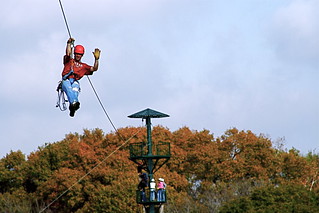
Zip line guide

It is easy the allow your thinking to drift into the what about this, what about that, how would we … Try to put that aside for a moment, stay student focused and let the idea of a more personalized student centred, flexible learning journey percolate.

Percolated

I would enjoy hearing your thoughts and ideas about creating and leveraging flex time for learning.  Please comment or connect on Twitter: @markwcarbone 

Acknowledgements:
Creative Commons photo credit: ziptheusa (https://www.flickr.com/photos/ziptheusa) and lockergnome (https://www.flickr.com/photos/lockergnome)

~Mark
markicon2

Are We at a Saturation Point

Edu Gridlock Part 3:

I enjoyed recent interactions with students around participation in strategic planning  I thought the students participated well in the sessions and  raised some good points from my view.

Much of the conversation focused around important issues such as the importance of an inclusive school culture and flexible programming to meet a variety of important needs – all good.

The one element that stuck with me though was this notion of “too many rules”. The students gave several examples of bringing ideas forward to foster positive school  culture but were met with a “no, because …” .  This reasons were many and varied — in essence I would say inked in rules — provincial, local, too risky, we have to follow nutrition regulations … you get the idea.  Yet, many of the ideas were reasonable, and certainly would have been entertained a decade ago.

I am not at all thinking that we should be operating in education without a good working framework, but the conversation sure left me wondering if we have actually reached a point of “rule saturation”.  Perhaps there is a middle ground where things can be achieved in different, more flexible ways rather than being so mired in regulations and rules.

How can we promote thinking more out of the box, but with the framework box?  Thoughts?  Please share. 

~Mark
markicon2


Blogging from the Start – part 2

Edu Gridlock Part 2:

In Blogging from the Start I wrote about an innovative pre-service teacher program where blogging played a key role in the personal development of these teachers.

Fast forward to May 2016 where I had a chance to team up with Helen DeWaard (@hj_dewaard) and Donna Fry (@fryed) to hosting a discussion forum at the Faculties of Education,  Learning and Teaching for Tomorrow event.

FoEDforum

The session context was provided by Helen based on the work she has been doing with her pre-service students through blogging. During the “round room”  discussion, the notions of growth, shift and personal journey were explored by digging into some key questions:

1. What would it take for students to shift from blogging as a course assignment to blogging as a way of professional life?

2. How do we, as a collective, come to grips wiht sharing what you learn vs people/audiences judging what you don’t know or what you learn?

3. What does it really take to personally commit to a culture of open & visible learning and sharing?

4. What is the intrinsic value – why do bloggers keep blogging?

I invite you to listen to the podcast file from the event:

Intros and context > 0-18:40,
Main discussion 18:40 > end (1:05:00)

Blog!

How would you respond to the guiding questions?  I invite your comments or connect on twitter ( @markwcarbone ).

Additional Resources:
Follow Helen on Twitter: @hj_dewaard
Read Helen’s Professional Blog at: Igniting Teaching and Learning
Related Blog Post: Just Make It Public
Creative Commons Photo Credit (blog graphic) to Flickr user  ginaballerina
~Mark
markicon2

Blogging from the Start

Edu Gridlock Part 1:

I enjoyed hearing Seán Ó Grádaigh’s (@SeanOGraTek) presentation at the 2016 uLead conference.  In his presentation, Sean shares the journey of preparing pre service teachers for experiences in schools with 1:1 iPad programs.

Throughout the journey, information was gathered about individual technology skills (quite varied), attitudes towards using technology with students, building skills and capacity to use the technology more effectively and changes within these areas. Evidence collected showed significant growth in each of these area.

The interesting twist in the story was the shift to extending the use of the technology to something transformative – tools to capture and document their own (pre service teacher) lessons, experiences and reflections.  With intentional development of new ideas, the students used a variety of tools including facetime, audio (GarageBand), video (iMovie) and writing tools to capture their learnings and reflections in different formats.  iTunes U was used as a platform to share and comment within the class group.

In follow up correspondence, Seán has shared these 2 books which outline  practice:

Digital Reflection on iPad by Seán Ó Grádaigh
MGO ITE Programme by Seán Ó Grádaigh

along with this resource:  The Story of 1916 by Seán Ó Grádaigh
https://itun.es/ie/erY1bb.n

I was impressed that the journey ended with improved skills in using technology to enable better teaching and learning, that attitudes changed and that personal, and professional reflective practice was established in this manner.

In reflection, I note that the use of the Apple environment allows for seamless flow in the process of learning, documenting and sharing.  The notion of using a system that is easy to use, reliable, and has high compatibility is an important consideration in the planning and that there are other ‘device agnostic’ platforms that could accomplish this.

I wonder, what would education look like if this happened in all preservice teacher programs?  Would you change your practice and help move the mountain?

mountainview

~Mark
markicon2

Exploring K12 Gridlock

One of the interesting elements of this past school year for me was weaving together the thoughts, observations and ideas from the many conversations I enjoyed across Ontario via my PLN, both virtually and face to face.

The more I reflect on the conversations, and mull them over, I centre my thinking on the idea of educational grid lock. In many ways, it seems to me that we are in a state of increasing grid lock. There are so many opposing forces and change complexities in the K12 space, to me, many things seem, well, stuck.

gridlock-SamuelLeo-flickr

This summer I have decided to write a series of posts exploring this idea of edu gridlock, along with some questions and ideas on moving forward.

Photo credit: Flickr user samuel-leo for this creative commons licensed photo.

EduGridlock – up next: career long professional learning.

~Mark
markicon2

Student Feedback 1 to 1

I thought I would share some student feedback on their experiences with our 1 to 1 pilot project this year on the final day of the 15/16 school year.

“Another component of this course that completely differs from my previous year is the use of technology. Everyday, we were fortunate enough to use the chromebooks provided by the school rather than write with pencil and paper. Although, at the beginning I was very reluctant to have the entire course essentially online, I was able to develop my skills with computers and different programs we used throughout the semester.” – MP

“At the beginning of the coarse when i found out we were doing the coarse online and on chrome books everyday….I did not like the thought of it at all because I’m pretty horrible with computers and such. After this semester I now am capable to make a website and transition to using google docs all the time now for everything.” – KP

“Everything we did this semester was digital, meaning I did not use a single piece of paper. I really liked this aspect of the course, as I found it was easier to remain organized, and on-top of assignments. The google classroom was a bonus because it allowed me to work through multiple assignments simultaneously. Overall, I think in the current time period it makes sense for every English course to operate this was, and I’m really happy that I was able to experience this type of course two years in a row.” – MG

“For the entire semester, our class used Google Chromebooks to complete work and participate in class discussions. Not once this semester did I have to pull out a piece of paper (which was nice). Based on my experience, this is the way that all English classrooms should be like in the future.” -SP

“The daily use of technology was new to me for an ENG course. Initially, I was skeptical of its usefulness, and even feared that it would interfere with my ability to do rough work, because I was so accustomed to paper-and-pen work. However, the use of technology was majorly useful. I very much enjoyed the access to an instant and limitless dictionary, thesaurus, encyclopedia, library, and on and on. I am convinced my work was better for having access to these things, especially the first two items of that list.” – SN

“I enjoyed that the course was very technology based with everyone having a chrome book to work on. I feel it makes life a lot easier when all of my work can be accessed from anywhere and can be handed in from anywhere.” – LB

“Although the technology portion of this course was new to me and took a little getting used to, it was one of my favourite parts of this course. Learning through the source of technology was a good way to keep teens of our generation focused on learning in the classroom. Having all/most assignments online and easy to access was really helpful when working at home or somewhere aways from school grounds. Also being able to hand in assignments online was easier for me personally because I liked having the night of the due date to finalize my writing or slideshow before turning it in. “

I look forward to launching our 1:1 program across all secondary schools in September!

~Mark

markicon2

Students Thinking Mobile and Cloud

You never know what surprise might happen in a day. This was such a great student written letter to receive – forward thinking and action oriented with a vision.

By happenstance, I received this letter during the same week as I completed a number of school visits to converse with Principals about the role of technology in the change process.

It is so awesome to see students thinking about change and signalling a readiness from their perspective. I look forward to responding to this student next week. I am thinking a Google Hangout conversation would be a nice approach if it can be worked out.

scan of letter (with student name removed for privacy)
studentletter1

student_letter2


~Mark
markicon2

OASBO Triple Tribute

It was great to attend the final OASBO ICT meeting of the 15/16 school year yesterday.  It was my first meeting in quite some time and it was great to feel the friendship, passion, and energy in the room – such a strong sense of team and professionalism.

To me though, this particular meeting seemed to be a marker in time as the close of this school year brings change.  Three members of the ICT family are retiring: Greg Elliott, Ron Plaizier and  Wayne Toms.

Screen Shot 2016-06-16 at 11.46.45 PMGreg                                       Ron                                Wayne

These IT leaders are exemplary professionals who have provided leadership, guidance, mentoring, visioning, problem solving and openly learned while forging a strong and vibrant ICT family in the Ontario K-12 education space.

Congratulations to all of you.  I wish you a long and happy retirement. Please don’t stray too far from our IT/ICT family!!!

~Mark
markicon2


Maker ?s

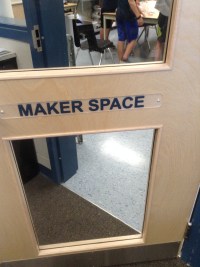
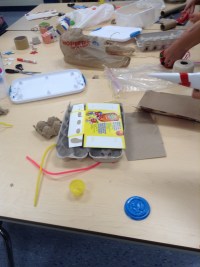
I recently had a chance to visit a couple of schools in a nearby school board to check out their new MakerSpace learning areas.  Is was definitely a worthwhile day of conversation, questions and observations.

IMG_0179

One school was brand new (Sept. 2015) and had a built in MakerSpace space room roughly 20′ x 24′ with two green rooms available off one side.  The room was well equipped via the start up funds with a variety options for students to make and explore.  The students using the room were very engaged and functioned well within the space. Staff were extremely positive about the availability of this type of learning space within their school.

The second site had a similar sized MakerSpace room created as part of a school renovation.  Equipping of this room was up to the school. Staff noted that acquiring items for the room would be done over time as funds were available.

In both schools the MakerSpace rooms were connected to the library which is considered more as a learning commons.

In reflecting on the day, I am left pondering a few a few aspects of the MakerSpace movement.

  • Is MakerSpace a place? or a strategy to embed in the learning journey?
  • If MakerSpace is a place, how do students respond to “scheduled access” vs as available or as needed?
  • Is it possible the MakerSpace room might become outdated or disrupted by a future change?  To give some context, I am thinking about how computer labs were disrupted by mobile technology – the place vs embedded as part of learning space.
  • How would differing school cultures handle making ‘only in the space’ vs taking the ‘goods’ and  making elsewhere?
  • MakerSpace vs MakerCulture
  • Make, Mix, Remix

I would be interested in learning your opinions about MakerSpace and invite you to contribute a comment here or perhaps connect with me on Twitter to exchange ideas.

Gallery of the Day

IMG_0162

IMG_0164


IMG_0166

IMG_0173


IMG_0174

IMG_0175


IMG_0177

IMG_0178


Related Resources:  Follow #makerspace  on Twitter.

~Mark
markicon2

Connect, Learn, Reflect, Share: Make a Difference Today