Category Archives: OSSEMOOC

Exploring Moocs at CyberSummit15

Last week I had the opportunity to attend and present at the  Cyber Summit 2105  conference.  I was thrilled to be partnered with Jonathan Schaeffer, a Distinguished University Professor of Computing Science and currently the Dean of the Faculty of Science, at the University of Alberta for the presentation topic:  Are MOOCs Past Their Peaks?

I began the session by sharing the 2 year journey of  OSSEMOOC,  a learning community supported by OSAPAC which I co-lead with Donna Miller Fry. (@fryed)

Jonathan shared his perspective and insights on the MOOC movement, noting that  while it is only a few years old, it has already had a tremendous impact on teaching and learning. Although some of the original hype surrounding MOOCs has not been realized, the reality is that they are here for good and are influencing institutional thinking.

In reflection, although the perspectives we each  presented represented significantly different contexts,  some very interesting commonalities emerged.  In summary:

  • teaching is all about meeting the students needs (not limited to the teacher’s needs or comfort zone)
  • MOOCs do, and will continue to play a role in moving learning forward
  • MOOC’s are playing a disruptive role along with other technologies
  • Educators own the responsibility to keep exploring new possibilities (including with technology) to achieve the best possible learning experiences for students.
  • There is an important need for “mini moocs” that needs to be recognized and acted on
  • Building a quality brand matters

My slides for the OSSEMOOC portion of the presentation:

Many thanks to those who attended our session.

~Mark


Being Intentional About NEXT

As summer winds down and the sunset times are getting notably earlier,  the start of a fresh school year is almost upon us.  Generally, I sense a focus on  anticipation for what will unfold,  but within this notion,  I find myself zeroing in on what will be different, what opportunities will come into play and how to bring change into effect.

I look forward to my continued work with  Donna Fry  on the OSSEMOOC  project where we focus efforts on  connected leadership  and the importance of  Now and NEXT.  I have set a personal and group ‘NEXT’ for 2015/16 and thought I would share them in different formats to illustrate that there are many approaches to creating your online voice.

Personal:

.

— prepared with  Tellagami  which I learned about at #CATC15

Group: 

20time_book_cover

Listen to the podcast:

What will your NEXT be?  Join the conversation by sharing your plans via blog post, podcast, animation or video clip with OSSEMOOC by contributing to the  collaborative  project.

~Mark


Digging Deeper into Edu and Edtech

When opportunity knocks,  answer!

I was recently approached by Kristin Frizzell (@71frizzell) who is taking a course with  Brenda Sherry  (@brendasherry)  to do an interview as a component of the course. This sounded like a great opportunity so we worked out a suitable time this week.

I was impressed with the set of questions the class collaboratively developed around the intersection of learning, instructional practice and edtech.  Our Google Hangout on Air meeting was our first “official”  face to face (F2F)  — hmmm, make that virtual F2F  —  meeting and conversation.  Awesome!

I hope our discussion around the question set stimulates your thinking and supports your learning.

I look forward to a continued connection with ongoing learning and sharing with Kristin.

~Mark

Beyond the Wall

This week I came across an article about “hitting the wall” with social media (via social meda 🙂).   I thought it was a good read,  and it was certainly easy for me to relate this to many conversations  I have had about the  OSSEMOOC  project.

Getting to the wall seems to be an all too familiar story, the “too” problem – takes too much time,  too few characters, too many choices, too much online time, too hard to organize, too … well, you get the picture.

brick wall now what

Yet,  when people stick at it and get beyond these questions and concerns by finding connections, relevance and meaning, they don’t go back.  Learn to channel information,  improve meaning or context, contribute and balance time & work flow in new and more powerful ways.

There are some nice tips about setting realistic goals and pacing yourself. You can read the full article at  social media today.  Why not apply some of these tips to the  30 day program at OSSEMOOC (see sidebar).

Make your “wall experience” a journey,

SAMSUNG CAMERA PICTURES

a personal journey!!!

SAMSUNG CAMERA PICTURES

Perhaps you will find that your journey will have this result!

~Mark

English Association Presentation Resources

This post combines the slide decks and resources from the 2 English Association sessions on the April 17th professional learning session into one presentation.

~Mark

Remix – Connect – Challenge

As educators, we ofter hear that the  plan, act, assess, reflect (PAAR) cycle promoted as excellent professional practice.  Extend this to an online context:  the importance of sharing, telling your story, learning from each other (the smartest person in the room is the room),  building relationships,  leveraging online connections and opportunities and finally using technology tools to facilitate this process (don’t just focus on the technology itself),

I was struck by my reading experience this morning.  Call it what you will: growing awareness, synchronicity, convergence, coincidence  or perhaps some other term of your choice, but there certainly was an emerging theme.

remix

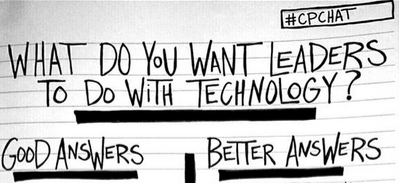
First,  I see an interesting Facebook post by Patrick Larkin,  a valued member of my Personal Learning Network (PLN) highlighting a position on school and system leader technology use by  George Couros.  George concluded is blog post with this powerful question: If the purposeful use of technology can enhance or accelerate those ideas above, shouldn’t more leaders look at how these tools can be used in their own practice?   Got you thinking?  Read George’s thoughts [here].

As I finish reading George’s article,  an alert pops up that a new OSSEMOOC  post called  How Do We Get There From Here?  has gone live. Perfect timing Donna.  Intrigued by the title, I decide to take a quick look. Talk about timely.

Leaders_Tech_good_bad.

You will have to read the post (How Do We Get There From Here?) to see the list 🙂

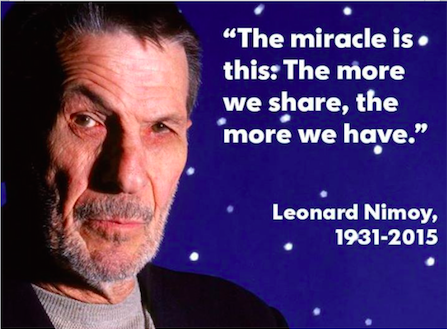
Now,  back to catching up on Facebook happenings … where did I leave off?   Timely:  Kathi Smith  has re-shared a Leonard Nimoy quote that really resonates with all of the reading I just finished.  Perfect!

spock_share

In some of my earlier thinking about this topic, I wrote “Allow the global community of educators the privilege of searching, finding, reading, re-reading, sharing, curating, linking and commenting on your blog posts.”  Read my full blog post:  Just Make It Public.

Consider your role in learning from other educators.  Take the challenge and make Spock proud!

Additional Resources

… from OSSEMOOC and Dean Shareski.

~Mark

Purposeful Connecting

As I was reviewing materials for some upcoming presentation, I was struck by the insightfulness Silvana Hoxha shared in the interview I did with her in preparation for an OSSEMOOC submission to the K12 Online Conference.

I am confident that you will find Silvana’s message inspiring. Grab a comfy chair and enjoy the message she has to share.

Related Resources

Connected Learners Need Connected Leaders – an Ontario Perspective. (K12 Online Conference Submission)

TEDx Talk by Mark W. Carbone & Donna Miller Fry
(TEDxKitchenerED: Connected Learners Need Connected Leaders)

~Mark

Thinking About Professional Learning

Reblog from  OSSEMOOC.

If you were not able to join us live this evening,  the session recording is now available [here].  A summary of some of the thinking we shared, and some of the questions that arose from the discussion are captured below.  Please feel free to continue the conversation in the comments.

I’m not sure we answered any of the questions we used as provocations this evening, but the discussion was rich, and it led to more questions.

We began with this question:

“How does a shift occur from a mindset where learning is provided to a culture where learning is sought?”

This applies to students and teachers.  It’s a big shift!  But we are seeing a critical mass now believing that this must go forward.  Consider this link shared this evening: http://mltsfilm.org/

Or, consider this story about China telling its students to quit school: http://zhaolearning.com/2015/01/22/china-encourages-college-students-to-suspend-study-and-become-entrepreneurs-and-innovators/ .

Raghava KK spoke eloquently on this very topic last weekend at #Educon.

Agency, or ownership of learning, is a powerful concept when we consider both student and adult/educator learning.

We know that parents need to be involved in the shift.  They are products of a system built in the 1800’s, but it is the system they trust.  How do we bring them into the conversation of what education needs to look like in the year 2015?  How do we address their concerns about “preparation for high school” and “preparation for university”?

Is the inertia of higher education a brick wall preventing change? Is the focus on marks as the filter for higher education opportunity stifling learning?

What is the importance and impact of “tradition” on the work we are doing in trying to change to a culture of learning?

Student teachers exist in the higher education system.  How does this affect their thinking about what education can be?

We hear university professors complain that students don’t have the critical thinking skills they expect, yet the entry filter into university is a two digit number that may have nothing to do with critical thinking skills.

Will our elementary students in Ontario today be the drivers of change?  Will they stand up for quality opportunities for inquiry over memorization and test taking?  Will they resist a system that forces them to memorize answers instead of encouraging them to ask questions?

How much curiosity will they be able to retain?

How can we disrupt the thinking around professional learning.  Do we need a new name for PD days?  What might that look like?

PL (Professional Learning) Day? SD (Self-Directed) Day? PLC Day?

Do you believe that all educator professional learning should be directed by what knowledge and skills the data indicate that students need to succeed (i.e., that all professional learning is based on student learning needs)?

Can professional learning be based on the passions of the educator?

Are you working in an environment where your colleagues challenge your practice to make you think deeply about what you are doing?

Are we valuing professional capital (Fullan and Hargreaves) enough?  Sal Khan says that the nations who will be strong in the future are those who have nurtured innovation and creativity among their people, as we shift from and industrial to an information society (http://mltsfilm.org/).

Do you think that “Professional Development” creates a culture of learned helplessness? Have we taught educators to wait for someone to teach them?

Have we done the same for our students?

Is this the only PD really needed: “The opportunity to learn where to find something when we need to learn about it”?

If we want kids to explore and learn, why would we sit back and wait for someone to teach us?

Should schools create a culture of teacher-learner agency?

(From Wikipedia, “In the social sciences, agency is the capacity of individuals to act independently and to make their own free choices”.)

We’d love to hear your thinking about this.  Feel free to comment, and please join us live next Tuesday at 8 p.m. EST for more thinking and learning on this topic.  More details will be posted at the OSSEMOOC site.
One Word for 2015

I must admit I was intrigued by this tweet when I saw it, and I have been mulling over the notion of picking ‘a word’ to focus my 2015 efforts.

OneWordTweet

In considering this, I recognized that actually getting possible choices down to just one word would indeed be a challenge. I began to think about short phases, pairs of words with dashes or underscores linking them to one.  Well,  you-get- the_ picture.

Knowing this was the open mic discussion topic for OSSEMOOC tonight, I had settled on “model” as my word.  I think it is important to model what you seek.  Some key elements on my list include:

  • connected leading & learning
  • listening
  • seeking understanding and
  • problem solving to name a few.

This morning at our system leaders meeting we watched this TED Talk by Onora O’Neill

to kick off a discussion about deepening our understanding of trust. This topic seemed to solidify my choice to model.  Add trust to the list.

I have settled on and shared my word: “model”.   What is your word? Please share!

OneWordGraphic

~Mark

WBE workshop session resources

Thank you to those participants who attended my workshop presentations today. As promised, I am sharing the resources:

Conference Twitter feed  #wbecon14

Enjoy a free,  connected, self directed, professional learning experience through  OSSEMOOC  (blog) and/or connect to the OSSEMOOC  Twitter feed.

Additional resources are listed at the end of the slide deck.  Stay connected and continue to  share your learning.

~Mark