Today’s post shares the resources being used in a presentation at the Education Technology Summit with Lorie Hough.
~Mark
Today’s post shares the resources being used in a presentation at the Education Technology Summit with Lorie Hough.
~Mark
I often listen to the morning CBC KW broadcast hosted by Craig Norris on the way into work. Recently Craig had a piece on the show about an app called Yik Yak that caught my attention.
Wikipedia describes Yik Yak as an app that “allows people to anonymously create and view “Yaks” within a 10 mile radius …. for sharing primarily with those in close proximity to the user, potentially making it more intimate and relevant for people reading the posts. All users have the ability to contribute to the stream by writing, responding, and liking or disliking yaks.” Read more detail [here] .

Image from http://services.flikie.com/
Hmmm … location based, anonymous, instant messaging … It doesn’t take much pondering to recognize the huge potential for misuse.
But, it doesn’t have to be that way. Each of us has choices to make, personal responsibility and accountability for our actions. One could choose to share positive thoughts, ideas, comments, compliments etc. through this type of service. Why not?
What choice would you make when using this service?
The CBC article and interviews.
10 things to know about Yik Yak
Digital Citizenship resources developed by OSAPAC.
30 Days of THINK.
~Mark
Reblog from OSSEMOOC.
If you were not able to join us live this evening, the session recording is now available [here]. A summary of some of the thinking we shared, and some of the questions that arose from the discussion are captured below. Please feel free to continue the conversation in the comments.
I’m not sure we answered any of the questions we used as provocations this evening, but the discussion was rich, and it led to more questions.
We began with this question:
“How does a shift occur from a mindset where learning is provided to a culture where learning is sought?”
This applies to students and teachers. It’s a big shift! But we are seeing a critical mass now believing that this must go forward. Consider this link shared this evening: http://mltsfilm.org/
Or, consider this story about China telling its students to quit school: http://zhaolearning.com/2015/01/22/china-encourages-college-students-to-suspend-study-and-become-entrepreneurs-and-innovators/ .
Raghava KK spoke eloquently on this very topic last weekend at #Educon.
Agency, or ownership of learning, is a powerful concept when we consider both student and adult/educator learning.
We know that parents need to be involved in the shift. They are products of a system built in the 1800’s, but it is the system they trust. How do we bring them into the conversation of what education needs to look like in the year 2015? How do we address their concerns about “preparation for high school” and “preparation for university”?
Is the inertia of higher education a brick wall preventing change? Is the focus on marks as the filter for higher education opportunity stifling learning?
What is the importance and impact of “tradition” on the work we are doing in trying to change to a culture of learning?
Student teachers exist in the higher education system. How does this affect their thinking about what education can be?
We hear university professors complain that students don’t have the critical thinking skills they expect, yet the entry filter into university is a two digit number that may have nothing to do with critical thinking skills.
Will our elementary students in Ontario today be the drivers of change? Will they stand up for quality opportunities for inquiry over memorization and test taking? Will they resist a system that forces them to memorize answers instead of encouraging them to ask questions?
How much curiosity will they be able to retain?
How can we disrupt the thinking around professional learning. Do we need a new name for PD days? What might that look like?
PL (Professional Learning) Day? SD (Self-Directed) Day? PLC Day?
Do you believe that all educator professional learning should be directed by what knowledge and skills the data indicate that students need to succeed (i.e., that all professional learning is based on student learning needs)?
Can professional learning be based on the passions of the educator?
Are you working in an environment where your colleagues challenge your practice to make you think deeply about what you are doing?
Are we valuing professional capital (Fullan and Hargreaves) enough? Sal Khan says that the nations who will be strong in the future are those who have nurtured innovation and creativity among their people, as we shift from and industrial to an information society (http://mltsfilm.org/).
Do you think that “Professional Development” creates a culture of learned helplessness? Have we taught educators to wait for someone to teach them?
Have we done the same for our students?
Is this the only PD really needed: “The opportunity to learn where to find something when we need to learn about it”?
If we want kids to explore and learn, why would we sit back and wait for someone to teach us?
Should schools create a culture of teacher-learner agency?
(From Wikipedia, “In the social sciences, agency is the capacity of individuals to act independently and to make their own free choices”.)
We’d love to hear your thinking about this. Feel free to comment, and please join us live next Tuesday at 8 p.m. EST for more thinking and learning on this topic. More details will be posted at the OSSEMOOC site.
I must admit I was intrigued by this tweet when I saw it, and I have been mulling over the notion of picking ‘a word’ to focus my 2015 efforts.

In considering this, I recognized that actually getting possible choices down to just one word would indeed be a challenge. I began to think about short phases, pairs of words with dashes or underscores linking them to one. Well, you-get- the_ picture.
Knowing this was the open mic discussion topic for OSSEMOOC tonight, I had settled on “model” as my word. I think it is important to model what you seek. Some key elements on my list include:
This morning at our system leaders meeting we watched this TED Talk by Onora O’Neill
to kick off a discussion about deepening our understanding of trust. This topic seemed to solidify my choice to model. Add trust to the list.
I have settled on and shared my word: “model”. What is your word? Please share!

~Mark
The Waterloo Region District School Board will host their 3rd annual summit in April 2015.

This will be a 4 day event with the following schedule:
Thursday April 9: Ontario GAFE Technical Community meeting
Friday April 10: Boot Camp courses
Saturday April 11th and Sunday April 12th: GAFE Summit with the EdTech Team.
Details are online at WRDSB hosted GAFE Summit.
Join us for a great professional learning opportunity.

~Mark
Happy 2015. I hope this year is a great year for you personally and professionally.
Over the last couple of weeks, I noticed this graphic popping up in a variety of tweets and retweets.
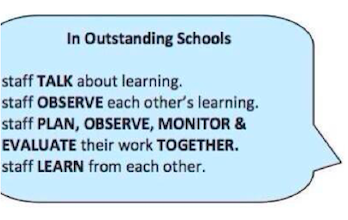
I am not sure why, but this image stayed with me. While there are exemplary practices listed for sure, it struck me that this message is incomplete.
In my view the key elements missing are connected learning and leading, effective use of digital tools and resources or making your thinking visible.
In 2015, I don’t think these elements can be left out of the educational equation.
Please share your thoughts in a comment or connect with me on twitter.
~Mark
I have been a longtime believer in a self directed job embedded approach to staff development. For several years I have had the privilege of working with a dedicated team in IT Services at the Waterloo Region District School Board to design and deliver staff development programs fitting this ideal.
Last fall I participated in the 2013 Connected Educator Month activities which included an opportunity to complete an interview and submit documentation about our CATC Camp and CATC connections programs along with information about the WRDSB Futures Forum Program.

I am honoured and thrilled that our WRDSB submission been selected as a part of the Future Ready program as an international case study and is published on the US government Tech Ed website as a one of six case studies selected.

A special announcement was shared with over 12,000 US based school superintendents.
Learn more about the Future Ready program.
The case studies, including our WRDSB submission are online here.
View the Future Ready professional learning toolkit.
I want to acknowledge the team of Rebecca Rouse, Harry Niezen and recent retirees Ron Millar and Anita Brooks-Kirkland for their insightful and collaborative work with me in on our ITS staff development program. I also appreciate the on going support and collaborative work of Mary Sue Meredith and Ken Whytock.
~Mark
Yesterday I had a chance to hear Simon Breakspear (@simonbreakspear) deliver his “Learning Redesigned” presentation. I thought the dive into deeper learning for all, and HOW was brilliant and thought provoking.
I have shared a simplified sketch of few key elements of the CMA model from my notability musings.

I am really interested in what Simon identified as three key aspects of change: start small, move fast, and iterate frequently. Clearly, these are aspects of change that big organizations such as K12 institutions do not excel at. As I was reflecting on his message over the day, I got to thinking about other connections within the K12 structure.
I don’t see this insight limited to learning and instructional practice. IT departments need to operate in this way too. I can envision many benefits of striking more quickly with technology change and implementation – especially with the ever increasing rate of digital change. The rapid iteration notion would apply to developing support models, tweaking networks for optimum performance and perhaps dynamic agile assignment of people resources to deal with trending needs re help-desk support models etc.
I wonder if the real quest is for instructional change & digital change to be working through this process at the same time for a more harmonious, rapid and positive change.
I love the AMPLIFY element of Simon’s model. There is no replacement for nurturing others, starting conversations and sharing your thinking and learning. PERIOD. As part of the go forward process, in my view it is critical that we, yes we – all of us, take the time to share our experiences in ways that are findable, sharable and provide forums for comments and questions: blogs, videos, chats etc. – we must leverage the learnings from the journeys we each experience.
~Mark
Last week I had the privilege of participating on a panel discussion at the YRDSB’s Quest conference with Lewis Morgulis (DCDSB) and Russ Coles (YRDSB). The panel was moderated by Margaret Roberts (YRDSB). I appreciate that, with permission, we were able to livestream and record the session to offer a virtual learning opportunity to other interested educators.

The panel discussion was centred around four guiding questions:
Watch the panel session.
Following the panel discussion, participants engaged in table discussion guided by the question and statement set below.
Participants also added comments, ideas and questions to a Today’s Meeting back channel. I have shared three quotes that resonated with me below.
Russ: thinking outside the box while living in the box
Mary-Anne: innovation starts when we stop accepting the status quo
Donna Miller Fry: (virtually from TBay) Innovation requires a willingness to be distrubed by M. Wheatley
Do you find these quotes & ideas intriguing? Check out the full session transcript [here] from the Todays Meet collaboration space.
The closing comment spoke for itself: As a result of your learning today, what would you do to start to implement this in your own context?
Please share your innovation ideas!
~Mark
This week I have the opportunity to participate at the annual York Region DSB Quest conference on a panel discussion. Our topic is promoting innovative practices. I have received permission to livestream the panel session Thursday November 20th 2:15-3:45 p.m. EST to allow for virtual learning opportunities.
The live video stream event will be listed [here]. (Note: free account needed for viewing) . There is a Today’s meet back channel available at Promoting Innovative Practice.
Session details:


Additional information about the Quest Conference.
Follow the Quest twitter stream.
I hope you can join us.
~Mark
 ~ Mark's Musings ~ blog.markwcarbone.ca