Category Archives: General

History of the Internet: Reflections

Last Friday,  The Guardian published a series of interesting articles about the history of the Internet. On October 29th, 1969 the first two computers were connected between the University of California and the Stanford  Research Institute (several hundred miles) through an IMP (interface message processor) allowing the 2 users to login and type back and forth. While the actual date of the birth of the internet is debatable, this event arguably set the stage for everything that has followed.

There is some great reading in the publication and it certainly caused a trip down memory lane for me. Here are some of the things I remember using computers since the ‘early days’:

  • learning to program on a Sinclair computer, made by Timex
  • writing software for students on a Commodore PET
  • teaching introductory programming to grade 10 math students
  • the Icons – the first networked computers we had a school (10 MG file server)
  • learning to connect remotely to the file server (crashed more than it worked in those days)
  • music software on the Atari and Amiga computer systems (with MIDI capability)
  • buying my first 300 baud modem (and I still like hearing that ‘connect’ sound)
  • doing a WLU hosted stock market simulation with students (involved up/downloading)
  • WEIR – the Writers in Electronic Residence project
  • 1200 baud modems
  • the CHIMO communications system
  • the first library PAC machines, DOS interface
  • the first text based Mozilla browser
  • groups of computers sharing a single modem connection
  • all night long downloads, praying the connection was not interrupted
  • hosting and running a Bulletin Board System (BBS), an early email exchange system
  • writing software for my brother’s surveying company and using those early email methods to send the code
  • the early MACs, PCs, the first GUI interfaces
  • and the list goes on ….

One could write a list the size of a book, but I won’t.  Many of us are familiar with the portion of the journey over the last dozen years or so. Reading the publication somehow jolted my memories of the early telecommunication days – exciting times for sure. In those days, a lot of energy was spent just getting things to work. Who knew that we would end up where we are today:  a global community, fibre optic networking, web 2.0, free computer to computer video/audio connections, amazing collaboration tools, overwhelming information online which is doubling rapidly …. truly amazing.

Best of all, we have access to these amazing tools and a global community to impact on the educational process. Independent of your age, you are living at time when the opportunity to learn, connect and collaborate is nothing short of amazing. Embrace it!

~ Mark

En Route to PLP Ontario

Today I was looking forward to heading out in the afternoon for the PLP Ontario session with Will Richardson. My Blackberry blinked as morning communications rolled in. Traffic reports from Twitter were indicating some construction delays along the 401 route at Woodstock, but hopefully those would be clear by the time I was on the road.

It was a beautiful sunny afternoon, warm for this time of year. I made by traditional pre-drive stop at Tim Horton’s – black coffee, half decaf, then set my playlist on my ipod and off I went. Current traffic reports were now clear other than some paving west of London, so I was anticipating a good trip.

The drive was great, as expected. The unexpected was the road signs. I saw 3 signs that caught my attention. This first two were the standard wooden painted signs.

1. Fatigue kills, take a break.
2. Tailgating kills, leave some space.

While you can’t argue with either one of these statements, there was something unsettling about them. I guess it was the negative spin on encouraging positive driving habits.

The 3rd sign was one of those programmable, over the highway ones. You would expect to see a message concerning traffic conditions. The message was:

Don’t text or email while driving.

Whoa! – not expected at all. October 26th is hands free day on Ontario. Make sure you are ready for safe travel. Looking for hands free gear?   Many local vendors will have equipment, but you might be interested in checking out this cleverly named website:  Lets Yada

Drive safely!

~ Mark

Links: 2009-10-13: Tools for new bloggers

Links: 2009 10 13  — A few tools for new bloggers


1. 20 Simple Blogging Productivity Tools

2. Tips for writing on the web

3. Blogging Secrets

4. Royalty Free  Music and Sound Effects

5. Show yourself  Widget

6. Share this  button

7. Online photo  editing

Happy blogging.

~ Mark

CDN Thanksgiving – Reflecting

Thanksgiving weekend seems to be a time of tradition and reflection. As I write this post, I can see the beautiful trees outside shimmering in their various spectacular colours, observe the table is being set reflecting our family traditions and enjoy the aroma of the turkey cooking.

I certainly have much to be thankful for: good health, a wonderful loving family  and many good friends. In my role as CIO for the Board, I have a career  that is challenging, rewarding, engaging and  filled with opportunity. I have a wonderful staff and work with a talented and dedicated leadership team.

This year I have connected with many new people through professional associations and online collaboration opportunities. I appreciate the opportunity to learn and share with a great group of people. Technology has really been an enabler in facilitating these online connections. What an exciting time to be alive!

I sincerely hope I can return the many blessings I have by giving to others and making a difference.

~ Mark

Data in Education: Times have changed

Earlier this week, I attended our Admin Council meeting, a once a month meeting with our senior administrative team. Admin Council is a great group of people that truly work together to support students and the learning agenda. I am fortunate to have an opportunity to work as a member of this team.

Each of our meetings begins with a round table opportunity for each member to comment on the reflection topic identified for the meeting. This week, our topic was data use in education. It was really quite fascinating to hear the variety of comments from the team members about data use in their particular roles.

A sampling of data uses identified (one or two per person) at the meeting include:

  • capital planning
  • financial reporting
  • special education student tracking and analysis
  • student learning
  • school success planning
  • trends in legal data
  • pandemic planning
  • demographics related to strategic advertising
  • EQAO
  • OnSIS
  • backup verification
  • project planning and sustainability
  • staffing process
  • enrollment projections
  • workflow tracking and analysis
  • student assessment
  • transportation analysis
  • bus route planning

What struck me was the evidence of change. I wondered what the answers to that question would have been 5 or 10 years ago. There is no doubt in my mind, we are solidly in a data driven world in education with data analysis well established as a key element of the planning and decision making process.

That is progress!

~ Mark

Puzzles: math and language in harmony

This past weekend I celebrated that ‘annual milestone’ day with my family. Great food, lots of fun and I still feel as focused and energized as ever – just with a little more experience. 🙂

One of my presents was a new puzzle book – one that I had not seen around anywhere before. For those of you that know me and/or have been following my blog posts, might guess that the puzzle book is based on word games. If that was your guess, you are right but the book is much more than ‘just a word game’.

Flashback

In many ways the book reminds me of a chess book I purchased many years ago. If my memory serves me correctly, the book was by chess great Bobby Fischer. The book presented a series of puzzles with partially completed chess games and the reader had to determine a sequence of moves to place one set of players in check, check mate or establish a draw. I recall spending hours pouring over the book to determine the various solutions.

End Flashback

Back to my new puzzle book. It is a delightful combination of language, math and problem solving all wrapped up into one concept: series of words in Scrabble plays , 3 sets of tiles to place on the board (write on the page) to achieve a predetermined or required score and an opportunity to boost your vocabulary all at the same time!

Ding Ding Ding – This is a winner with me. If you enjoy puzzle books, check out Scrabble Puzzles by Joe Edley, published by Sterling.  A book like this might be a nice fit in a classroom. I am heading off to check out a new puzzle!

~ Mark

iPhones: Pushing the envelope

I came across some interesting videos highlighting where we are headed with the next generation of iPhone applications. I continue to be amazed at the rapid rate at which the envelope of what is possible is continually pushed. The 3 examples below illustrate different ways in which the envelope is being pushed.

Starbucks is developing an iPhone app which allows you to use a credit card to load money into the Starbucks app to use like a reusable gift card. Is this the birth of the iWallet?

StarBucks

Click here to watch the YouTube video

ARider: The next video demonstrates how iPhone GPS technology can benefit cyclists.

iPhone GPS

Click here to watch the YouTube video

The Bionic Eye application is essentially a new version of the ‘Nearest Subway’ application which previewed in the summer. The Bionic Eye allows users to locate fast food outlets, hotels and wifi hotspots.

Bionic Eye

Click here to watch the Bionic Eye demo on YouTube

~ Mark

Leadership: Managing Digital Distractions

One of the traits of a good leader is the ability to demonstrate individualized consideration for staff. Individualized consideration references the ability to treat and understand each employee as an individual. Putting this into practical terms, it means knowing employee strengths and weaknesses, how to challenge them on a personal level, and giving your undivided attention when interacting with them.

Now put this idea into your typical day. There will be lots going on — time constraints, multiple meetings scheduled back to back, demands on your time to make decisions etc. – you know the groove. People don’t meet for the sake of meeting (I hope). There must be some task at hand: project planning, issue resolution, budget, staffing etc.. and you are in attendance for a reason.

Reflection: In todays world we have many electronic communication tools that we use to support our work tasks. How do you manage these tools when you are with other staff?

  • Do you have the ability to focus on the task at hand and give your undivided attention to person/people with you?
  • Are you distracted by the devices and messaging tools as your disposal (smartphone/cell phone, landline, pager, computer or voicemail)?
  • If you are distracted, why are you? Do you need to be on ‘red alert’ for every incoming message?
  • Have you considered the message you send to the staff if you consistently put them second to these unpredictable interruptions?
  • Where have you placed them on the ‘importance’ scale?

Ironically, I came across the Hierarchy of Digital Distractions diagram (below) last week on the same day I was involved in a discussion about focusing on employees as individuals at a course. I doubt anyone would argue the convenience and benefits of using these tools in todays busy and complex work environment. And yes, there will be some exceptions when you do need to take a call. Does the incoming text/email/alert/call etc. always have to take priority?

Challenge: Consider the questions outlined above, and reflect upon whether your current practice could use a change.

digital distractions

Click here to view the original full size Hierarchy of Digital Distractions pyramid.

~ Mark

Mazes and Team Building

As part of a leadership course I am taking, we had an opportunity to use an electronic maze to illustrate some interesting points about team building.

The electric maze, or learning field, was a set of 48 squares arranged 6 x 8 embedded in a large floor mat. Each square was programmed to be ‘safe’ (off) or ‘alarmed’ (on).  Each of the two groups was allowed 10 minutes of strategy planning to set their tactics. The goals were to determine a safe path across the mat and then have each of the team members (6 in our case) cross the mat along the safe path. Team members were not allowed to talk after the 10 minute strategy session was complete. Each team was given an amount of ‘money’ which was used to pay for infractions such as stepping on an alarmed square, skipping a square or talking.

Playing the game itself was very enjoyable. Afterwards, it was interesting to reflect on the various assumptions and strategies of the different groups.

Success factors

  • team effort
  • observing
  • cooperation
  • remembering successes (correct moves)
  • remembering failures (additional learning)
  • assessing risk

Assumptions by some groups

  • the event was a competition
  • winning was the end goal (team members across and most money)

Reality Check

In fact, winning was not defined. The task was just assigned. In reflection, all groups realized that by working together the challenge could have been solved more easily if the groups worked together, collaborated and shared information and collective learning.

How often does the real life version of this event happen? How often do we miss opportunities to truly get something accomplished in an timely, efficient,  and perhaps more cost effective manner? Take the opportunity to analyze, plan work flow and  capitalize on the TOTAL resources available to deliver  a solid end result with a stronger team.

~ Mark

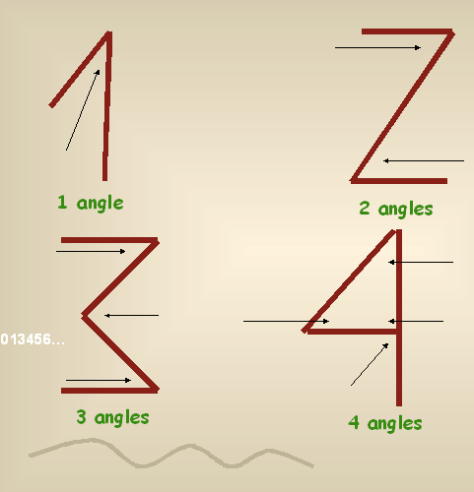
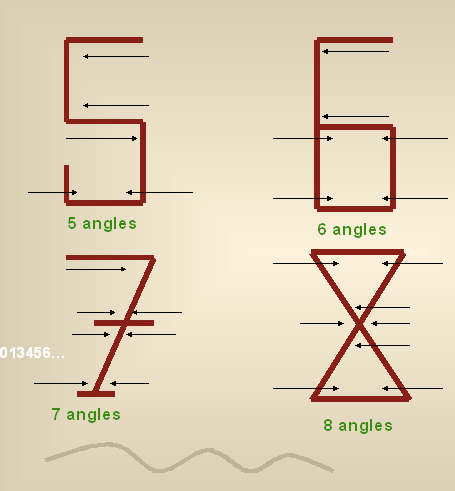
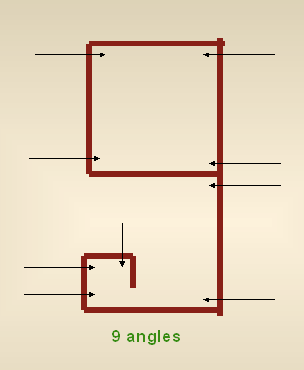
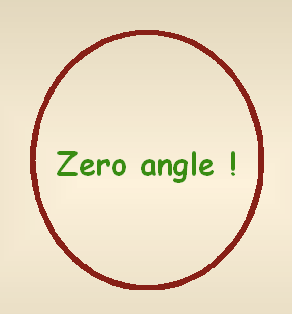
A New Angle on the History of Numbers

Numbers

Have you ever wondered why 1 is ‘one’, 2 is ‘two’ …?

Look at these algorithms written in their primitive forms.


Picture 5

Picture 6

Picture 7

Picture 8

Very interesting!

Note: The original source of this is unknown to me.

~ Mark