All posts by markwcarbone

I have 36 years experience in K-12 education. I have been fortunate to work in many different roles including teacher, department head, ICT consultant, IT Manager and CIO. Personal interests include performing in the Venturi Winds woodwind quintet, the Cambridge Symphony and the KW Community Orchestra as well as composing and arranging music. Connect, Learn, Reflect & Share - make a difference today!

Video Streaming on the Go

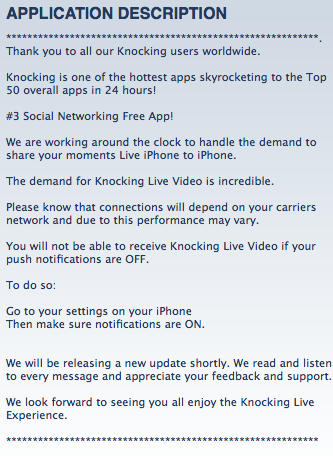
I recently became aware of two applications that allow users to stream video from their iPhones. Today was a download, install and try out apps for the the first time day. The products I tested are listed below.


I am already thinking about curriculum applications. First impressions will follow in a future post.

~ Mark

Social Media ID Probe

Question of the day: How willingly do social network users give up personal data?

This very question has been explored by Sophos UK. Sophos conducted testing in 2007 and 2009. The results may surprise you.

Given the efforts put into promoting and raising the awareness levels of Digital Citizenship, online safety and privacy, I would have anticipated a trend of improvement to be reflected in the results. However, this was not the case. I wonder if a big factor in this result stems from the continuing growth in the numbers of social network users. The Facebook blog currently reports over 300 million users. Just a few months ago the number was in the 250 million range. TwitDir, a Twitter directory currently shows 5.3 million users with an aggressive growth rate. Some estimates place the Twitter growth rate at 1382%. The reality is that this means there are high numbers of relatively inexperienced social networkers in the mix at any given point in time who may not be as savvy as more experienced online users.

Some highlights from the testing showed that:

  • 41 – 46% of users probed blindly accepted a friend request
  • one of the ‘blind friends’ was in fact a plastic duck
  • younger users tend to give out information more freely

Actual results of the probe are summarized in the chart below.


I would encourage you to read the report and recommendations for online safety at Sophos.com. From my point of view, the results indicate that there is considerable work to do in the area of Digital Citizenship and online safety.

~ Mark

December Tradition

Each year for the last decade, I have had the priviledge of participating in the Christmas Festival concert hosted at Benton St. Baptist Church in Kitchener. This event brings the church choir and soloists together with an orchestra formed through members of the local community. The weekend features four performances of the 2 hour concert program. This event is well received and each performance is sold out. I look forward to this event each year. The friendships and sharing of music with the participants is truly rewarding. I feel very fortunate to participate in this event each year.

The stage is set for the performances today. I wish you and your family a safe, healthy and enjoyable festive season.

~ Mark

PLP ‘on the road’

Yesterday I attended the ECNO annual AGM meeting in Toronto. As expected with the AGM of an organization, there is a certain amount of formal business processes to be followed. As mentioned in my blog post yesterday, by complete luck, I arrived an hour and a half early for the event. The best part about arriving early was that fellow Ontario PLP member @jeffreaburn.

I first met Jeff at the kickoff event for the Powerful Learning Planning (PLP) event in Windsor. Given the commonalities in our roles, we do cross paths at conferences and provincial meetings. Whether face to face, or online, I always find interactions with Jeff to be great learning experiences.

Our early arrival yesterday, was no exception. We had a great opportunity to discuss and compare IT department structures and strategies, netbook and iPod projects and the broad landscape of 21st century learning. Given our PLP connection, conversation eventually rolled around to a couple of key questions:

1. What is 21st century teaching?

2. How do we best create a culture of change and sustainability at the system level?

Culture changes in education need to encompass change that fundamentally impacts the way we teach. Ideas we discussed included:

  • teaching with technology embedded as more of a natural part of the learning process and not ‘separate’
  • significantly impacting teacher involvement in using technology – breaking past the keen ‘volunteer’ group and getting to a technology use by all scenario
  • strategies to expose and encourage greater use of free/cost effective web 2.0 tools in the learning process
  • ongoing PD opportunities
  • training for school administrators
  • stronger linkage of teacher technology training, embedded classroom use, school success plans and system goals
  • alignment of the instructional delivery to the technology world that is available to all of us – embrace the power

All in all, a great conversation that made the early arrival very worthwhile! The bonus was, I left with some key ideas to share with my staff and keep the conversation going with our Board. In the meantime, the learning will continue online.

~ Mark

Creatures of Habit?

This week I was scheduled to attend meetings in Toronto for OASBO and ECNO provincial IT functions.

Yesterday I set out to travel to the OASBO session which was begin hosted at the Peel District School Board, about an 85 km drive for me. I left just after 7:00 and pulled int0 the parking lot just in time at 8:55. I experienced major traffic bottlenecks in predictable spots, lots of inching along practising my shifting from 1st to 2nd gear and back.

Today’s AGM meeting was set for a location 3 interchanges farther into Toronto. Wanting to make sure I was on time for the AGM, I decided to leave earlier to account for the traffic slow downs experienced yesterday. I organized my morning to blast off at 6:30. Wonder of wonders, I experienced the ‘dream drive’ – no accidents, no construction, clear weather. I arrived in the parking lot at 7:25.

It was great to have an easy drive. I wonder  how predictably this ‘dream drive’ might occur? I wonder how much our ‘creatures of habit’ routines factor into making this drive predictable?

Just wondering.

~Mark

Tech Tip: Not what I expected

I was eating my lunch at my desk today and thumbing through a new issue of a publication (yes, paper) that I subscribe to. One of the pages had a ‘tech tip’ listed, and predictably, this caught my attention. What I read in the ‘tech tip’ was not at all what I expected to read. The actual tip described in detail the steps to download, save, convert video formats and repost/upload the video content hosted on YouTube to additional websites. Yikes! My internal ‘alarm bells’ to follow the rules (terms of use etc.) and support copyright were going off, especially since the publication is education oriented.

The YouTube terms of use policy specifically states that “Content on the Website is provided to you AS IS for your information and personal use only and may not be downloaded, copied, modified, produced, reproduced, distributed, transmitted, broadcast, displayed, sold, licensed, translated, published, performed or otherwise exploited for any other purposes whatsoever without the prior written consent of the respective owners.

In my mind, this is a great example of:  just because you can, and technology makes it easy, does not mean the activity is permitted and/or legal. I see this as a missed opportunity to enlighten the readership, promote ethical use of content and demonstrate digital citizenship. After work, I was sharing my ‘find’ with @hniezen and @rebrouse. We were debating whether or not I would point this out to the editor of the publication. I think we landed on yes, so I will craft an email to explore the situation further.

Related Reading

UK Guardian: digital economy bill
Digital Rights Management in Canada
Internet abuse and ISP liability
Internet Piracy Copyright Law in Canada
Canadian Journal of Communication: Bill C-60 and Copyright in Canada commentary

Enjoy the reading and learning.
~ Mark

Links for 2009-11-28

Links: 2009 11 28 — Interesting finds of the week

1. Questia Library for iPhone, iPod Touch

2. Ideas for text organizers to support student writing

3. District Administration: mobile devices in the classroom

4. Route 21: 21st century skills

5. Metiri Group: What’s so different about the 21st century?

6. Presenter’s perspective: Spectacle at Web 2.0 Expo

7. PBS Video: How Google Saved a School

8. Educators’ Guide for integrating social media

Enjoy the reading and learning.

~ Mark

Elluminate with the Ontario PLP group

Monday afternoon, we held an online Elluminate session with our Ontario PLP group with Will Richardson. For many of the participants, this was their first experience in this type of environment, so the session began with a tour of the features and controls which included screen layout options, audio (mic) testing, communication indicators (thumbs up/down, applause, I have a question, stepping away/I am back etc.) and  chat window functions.

I was really impressed with the level of participation and the comfort level displayed by the meeting attendees throughout this first session. I wanted to share some further thoughts about a discussion point we have had within our Ning group and during this online session.

The discussion topic centred around the use of the term ‘lurker’. In the online community this term is generally accepted as way to refer to people who ‘look around’ and seemingly watch the activity. The points in question are, independent of the common use of the expression:

a) Is the use of this term appropriate?  and

b) how does its use make you feel?

From my own point of view, I feel the use of this term has a negative connotation to it. While I am absolutely clear about the use of the term in this context, I would rather see a term used that presents a positive image. I see online participation occurring in three different categories:

  • Role 1: People who participate by reading and observing, more of a quiet studier.
  • Role 2: People that fall into this role are the connectors. They share information by forwarding emails, reposting blog articles, retweeting Twitter posts etc.
  • Role 3: People in this 3rd role are the initiators or contributors. They author their own blog posts, share social bookmark lists, respond to other people’s blog posts and suggest resources for others to be aware of or review.

Depending on the learning experience, a person move progress through all of these roles with a particular tool as well as having an ‘overall role’ with their online experience.

I was particularly interested in the small group discussion that occurred within the structure of our session. Will gave us a list of 7 big shifts, divided us into groups of 6 and asked each to have a discussion based on which of the big shifts resonated with them. The discussion in my group revolved around 2 shifts –

a) synchronous to asynchronous (and back again) and

b) place/time dependent to  anytime/anywhere/anyone learning

From my point of view, these are the two elements that are shaping our current learning opportunities and community development within the Ontario PLP group. Everyone is actively involved in reading and responding to posts in the discussion forums, blogging, connecting on Twitter etc. Each day provides an opportunity to embrace a steady trickle of learning and collaboration through the use of web 2.0 tools. In depth discussions are occurring, questions and new ideas are being posted, and new points of view are being explored. Factoring in our face to face kickoff, and the elluminate session, all of this activity falls into the 2 shifts or categories I identified. This opportunity is truly a synchronous/asynchronous anytime, anywhere, anyone learning journey.

This is certainly a fantastic opportunity and I am delighted to be part of the Ontario PLP leaders and learners team.

~ Mark

Reading: F vs Z patterns

At the recent ECOO conference, I was really fascinated by Ian Jukes’ presentation that highlighted the differences in reading patterns of many children today, especially if they are web users. Ian explained that the brains of this generation of students are actually wired differently than brains of previous generations of students. Of course, there are many implications for student learning if we take these findings to heart. Key findings include:

  • the brain is constantly learning
  • eye movements occur in different patterns, typically more F shaped than the Z shape we (adults) use
  • as a result, students of ignore areas of a page or screen that we might assume contains important content
  • students learn better when multimedia content is included
  • students view graphics before text
  • students read colour before black on white
  • pace of lesson delivery plays a factor in student engagement (Note: varies from student to student, but in general is faster than adults process information
  • tests show that people visualize content at a 90% rate

Now, think about the ramifications of not learning more about the student ‘digitally wired’ brain. What are the implications of:

  • anchor chart design
  • poster design
  • print and textbook layout
  • software screen layout design
  • web page design

I had a chance to share some of this information at our table discussion regarding effective use of anchor charts. This lead into a really engaging discussion about how to increase awareness and change our behaviours in the area of text design.

Since the conference, I have located a number of internet based resources on this topic which I have shared below.

Related Reading

F shaped reading patterns
Eye tracking patterns
Graphic Design layout patterns related to scanning patterns
F shaped reading patterns for web content
The Black Art of web publishing
The Luon blog post
Reading patterns

Enjoy the learning and thinking.

~ Mark

Moving the K12 privacy agenda forward

Today I attended a Privacy & Information Management session in London which was a good learning experience.

The session began with an opportunity to to view some of the 8 training videos that have been prepared for use in Ontario school Boards. The video series was designed for 3 target audiences: teachers, administrators and IT staff. Key areas of best practice addressed in the videos included:

  • physical documents
    • security
    • office practices
    • classroom practices
    • destruction
  • digital data
    • server locations
    • implications of outsourcing storage
    • laptop and USB key use
    • destruction of digital data (hardware recycling)
  • visual privacy
    • use of cell phones, smart phones, digital cameras and video recorders
    • guidelines for posting content on Board sites as well as uploading to public internet sites

Following the preview of the videos, the balance of the day provided opportunities to review strategies for implementation of Privacy and Information Management strategies and further discussion of the 3 areas identified above.  I found the discussion rich and in depth. My note taking included the following points:

  • laptop setup should include a BIOS level password, OS password and an encrypted area to store confidential data
  • recycling of hardware must include data destruction on the hard drives
  • prevent the use of peer to peer sharing tools such as Kaza and Limewire
  • enforce password format and change policies
  • key corporate level data stored locally where you can control access (information knows no boundaries)
  • store email in a centrally hosted system

Key implementation strategies should:

  • create a culture of awareness
  • update and/or write policies to reflect needs and goals
  • sustain energy and interest in this area (it is not a one time item)
  • make best practice strategies relevant to key user groups (teachers, admin, support staff etc.)
  • be shared as a team, this is not just one person’s torch to carry.

Drifting off a little as I was sitting in the sessions, my mind was flitting to other connections. After all, creating a culture of P & I Management awareness is connected to Digital Citizenship.  In some ways, there are interconnected tensions between privacy culture, digital citizenship, suitable access to K12 content for curriculum delivery (content filtering/open internet) and copyright. Somewhere in the middle of all of this is a sweet spot – establishing the required culture is the challenge. I am looking forward to my involvement on our team.

Related Reading

PIM Taskforce
Privacy Commissioner of Canada
Information and Privacy Commissioner of Ontario

~ Mark