All posts by markwcarbone

I have 36 years experience in K-12 education. I have been fortunate to work in many different roles including teacher, department head, ICT consultant, IT Manager and CIO. Personal interests include performing in the Venturi Winds woodwind quintet, the Cambridge Symphony and the KW Community Orchestra as well as composing and arranging music. Connect, Learn, Reflect & Share - make a difference today!

Links for 2009-12-27

Links: 2009 12 27 — Interesting finds of the week

1. Redefining Digital Citizenship

2. Australian school tries to liberate teen brains

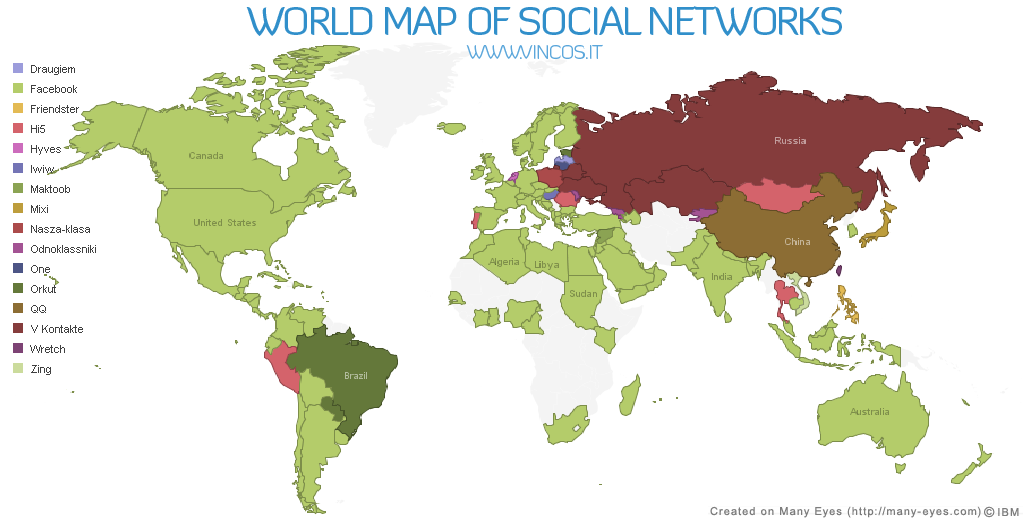
3. World Map of social networks

4. iTV app for iPhone/iPod Touch

5. Make a PDF book of your blog with Blog Booker

6. CNN’s top 10 trends for 2010.

7. Kobo, eReading anytime, anywhere

Happy learning.

~ Mark

Season’s Greetings

Season’s Greetings from my family to yours. Warm wishes for a safe, healthy and happy holiday.

~ Mark

Season's Greetings

Edu chit chat at ground level

We kicked today off with a lovely brunch hosted by very close friends – a perfect way to start the day! Many of the people in attendance are connected to the education scene in one way or another. Collectively we covered the range of parents, secondary teachers and department heads, vice principal, recently retired principal, university profs, soon to be teachers and me.

Of course, there was a healthy round of catching up on what is happening with the various families, plans for the festive season and, teachers being teachers, some ‘shop talk’ about what everyone was doing. So …. when it was my turn, I dived into the Ontario PLP experience I was enjoying and chatted about the potential powerful uses of social media tools in our system. Well, talk about start a multi dimensional conversation. I think we could have had a 2 day symposium with the brunch gang to explore the pros and cons all of the various options.

As a group, we represented decades of solid teaching experience. As a group, we represented an extremely diverse experiences in the areas of using, adopting (and embedding) technology in the way we teach, work and live.  We hit the whole range (minimum to maximum) of personal comfort levels, willingness to embrace new technologies, student engagement, the powerful potential of the tools available today and how the use of these tools would/could impact education in positive ways — a fascinating discussion to say the least.

We did cover one last point, and I saved it to last so it could stand on its own for emphasis — and it really struck a chord with me. The general consensus was that the typical teacher of today is not ready to embrace social media tools at this point in time for a number of reasons. At ‘ground level’

  • only a small percentage actually use social media tools
  • most teachers are not comfortable with the tools themselves, let alone embrace them in teaching
  • most teachers have not thought about embracing the power of social media in useful ways to support curriculum delivery
  • many teachers are not sure about the level of engagement the use of these tools may bring
  • some are curious about this ‘new world’

So, in yet another setting, we end up back at some of my favourite pondering points:

  • building communities and cultures of sharing
  • getting more teachers involved
  • etc., you can read my ‘list’ in an earlier blog post from this week

The important aspect of arriving at my favourite pondering points (again) is that I really trust the observations, opinions and insights that this group has about where things are at ‘in the field’. In some ways, this conversation was a reality check. Is the gap getting wider? In general, are we ‘preaching to the choir’?  More thinking and planning about systemic change, impacting the educational front etc. In some ways this is a nice lead into Will Richardson’s question, “what changed in 2009?”  Watch for an upcoming blog post where I will share my views on what changed.

~ Mark

The Coke Cake

Perhaps this holiday season you are getting together with family, the folks at work, or some friends through your online connections such as Twitter, PLP Ontario or Facebook.

If you are looking for something a little different (or a lot different) to make, why not give the Coke cake a spin. My sister passed along this recipe to me years ago. I have prepared it several times and each time it was a big hit.

Note: I have used different types of icing in an effort to vary the sugar levels!

Happy Festive Season.

~ Mark

The COCA-COLA Cake

Makes ones 9 x 13 cake.

Cake Ingredients:

  • 2 cups of all purpose flour
  • 2 cups of sugar
  • 1 cup of butter
  • 1 cup of coca-cola
  • 2 tbsp unsweetened cocoa powder
  • ½ cup buttermilk
  • 2 eggs
  • 2 tsp vanilla
  • 1 tsp baking soda
  • ¼ tsp salt
  • 1 ½ cups miniature marshmallows

Icing:

  • ½ cup butter
  • 6 tbsp coca-cola
  • 2 tbsp unsweetened coca powder
  • 1 pound (2 cups) powdered sugar (not icing sugar)
  • 1 tsp vanilla
  • 1 cup chopped pecans

For Cake: Preheat oven to 350°. Butter a 9 x 13 inch pan. Sift flour and sugar into a large bowl. Melt 1 cup of butter in a heavy sauce pan. Add coca-cola  and cocoa powder and bring just to a boil. Stir into flour mixture. Blend in buttermilk, eggs, vanilla, baking soda and salt. Fold in marshmallows. Pour into pan and bake until tester inserted in centre comes out clean. Baking time should be about 35 minutes.

Icing Preparation: Melt butter in heavy medium sized sauce pan. Add coca-cola and coca powder and bring just to a boil. Remove from heat. Stir in powdered sugar and vanilla. Fold in pecans. Spread icing over hot cake. Serve at room temperature.

Ontario Meetup: Are We Asking the Right Questions?

The recent Ontario Meetup online session provided the anticipated engaging discussion of educational directions. This particular session was led by @courosa. The discussion centred around the intersecting tensions in the K-12 educational environment between building online communities, embracing the value and power of social media tools and content filtering.

@dougpete captured the key points in his recent blog post  Getting Priorities Straight.  I have had the pleasure of having many engaging discussions with Doug around this very topic. I think he hit the nail on the head with his statement “From what we can see, there’s a real tightrope to be walked to reach the other side and keep the organization’s needs and the needs of the end user in balance”.

As I listened and participated in the online session, which wandered between the benefits and challenges with each of these areas, and since reflected on the nature of the discussion, it struck me that there may be a ‘new lens’ in the midst of this discussion. I am beginning to wonder if we are focusing on the right questions. It is my observation that there is a trend developing in these discussions:

  • building learning communities is the right thing to do in an educational environment
  • building a culture of sharing is important
  • content filtering policies can get in the way of reaching these goals

What I find troubling in these discussions, is that they often narrow to a focus on YouTube and Facebook, almost implying that the only way to achieve these goals is with the specific use of these tools.  I think the ‘new lens’ or focus on this topic needs to look at this from a different point of view. I am thinking more about change at the system level to embrace this in a more holistic way. Certainly, simply unblocking a site or two does not mean an education system of several thousand staff and students is ready to change and be instantly successful.

Assuming that building learning communities and establishing this culture of sharing are important, and fundamentally the right place to ‘get to’, perhaps the questions that need addressing are:

  • How do we get more people involved?
  • How do we make them comfortable in their journey to ‘jump in’ to this new world?
  • How do we best teach, practice and embed character development and digital citizenship for both students and staff?
  • How do we keep training costs to a minimum so that this does not become a barrier?
  • How do we move this agenda forward with or without the specific use of  ‘magnet’ sites such as YouTube and/or  Facebook?
  • How do we select some free/low cost tools so that
    • cost is not a barrier
    • there is some elements of consistency as teachers change grades and/or schools
    • the integrity of the environment (the ‘network’ = internal + internet) is reliable for all to use for both learning and business functions
  • Should there be some thought put into the ‘gradual release of responsibility’ concept being applied to social media use as there is in other curriculum areas?
  • As things change, and opportunities present themselves, we are promoting and celebrating the change(s)

These are the questions whirring though my mind. I want to extend a thank you to my PLP group and the participants of the Ontario Meetup group for continuing this important dialogue and keeping the discussion going. More thinking and planning to do!

~ Mark

Class visit for iPod project launch

This past week had a number of highlights:

  • Tuesday night Ontario Meetup online session with Alec Couros
  • Discussions with school administrators about content filtering and system readiness for change
  • iPod Touch project launch
  • a presentation from @AnitaBK to our Board’s consultant staff regarding our new library program design
  • ongoing discussions with @ron_mill, @hniezen and @rebrouse about keeping the conversation alive, keep pushing the envelope

So much to blog about, and not enough available time to blog this past week. Why are days only 24 hours long???

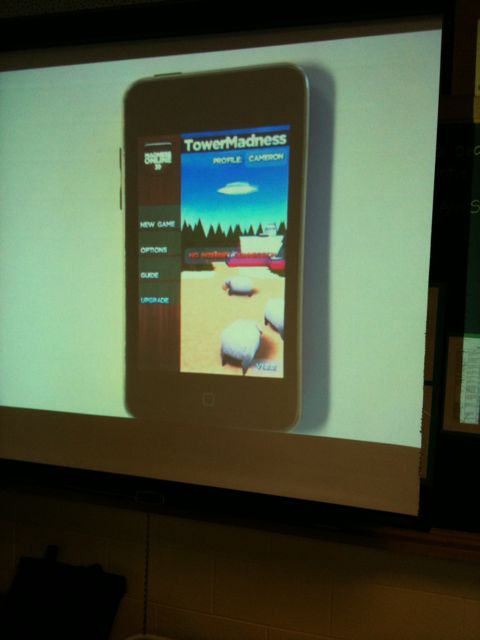
Thursday, I had the opportunity to visit the classroom of @kimsten for the launch of the iPod project. This particular class has been issued a set of iPod Touch units to use on a 1:1 basis for the balance of the school year. The iPods will be used both at school and at home.

The students had been issued their iPods a day or two before the ‘launch’. With expectations reviewed, students were busy with their first assignment – check out the iTunes store to see what applications were available and which ones captured their interest.

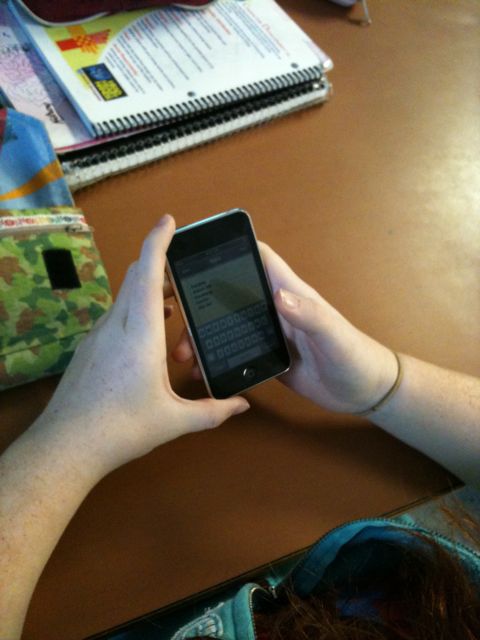
I appreciated the opportunity to attend the session and feel the excitement in the room as students eagerly waited for their turn to demonstrate their application choice to the class with the document camera. As one might expect, many of the students had investigated the games section. I was impressed with the number of students that had also explored other areas of interest and were prepared to present these choices. Chatting informally with the students, they shared a broad range of interests in the applications including google earth, wordpress (for blogging), puzzle/problem solving, interactive whiteboard (shared drawing), creation tools for art and communication tools. Some students were already taking typing lists to capture the choices of other students with the iPod notes application.

I know this will be an interesting learning opportunity for the class, and I look forward to being involved as they travel this mobile learning journey.  A few photos from my visit are displayed below.


Following the student presentations, the class was off to the lab to do a collaborative writing session using etherpad with @wattsup56.

~ Mark

Things that make you go hmmm

Hmmmmm

Last Friday, I wrote a blog post about the excellent session about copyright and the Creative Commons presented by @thecleversheep at the recent RCAC event.

Over the weekend, I became aware of the Artists’ lawsuit against major record labels for copyright infringement. While the lawsuit dates back to 2008, it keeps popping up in the news because new plaintiffs keep joining the case.

The issue has occurred because record companies no longer had to get a compulsory license every time they used a song. As long as the song was added to a list of music pending authorization. Essentially, this translates to using the song now as long as it was on a ‘pending’ list, and the artist(s) would be paid later. As you might guess, this did not work out so well – the promise of payment has not happened. The list of ‘pending’ songs is over 300,000 – YIKES. The copyright infringement lawsuit may be valued as high as $ 6 billion.

How ironic the the record companies will go after music sharing violations of various schemes, then hold out on paying the artists themselves. Hmmmm. Thanks to Twitter contact @NBCCSue for posting the link to this article.

Related Reading

1. View the ars technica blog post.

~ Mark

Links for 2009-12-13

Links: 2009 12 13 — Interesting finds of the week

1. Digital Media and Learning

2. NASSP: Shifting Ground

3. Stumble Upon: BBC article Children who use technology are better writers

4. Track iTunes for new apps with AppShoper (Thanks @msjweir)

5. Paper: PLC’s: Investing in Invention

6. Discovery Education: Conquering Technophobia

Enjoy the learning, keep up the sharing.

~ Mark

New Facebook Privacy Settings Get Mixed Reaction

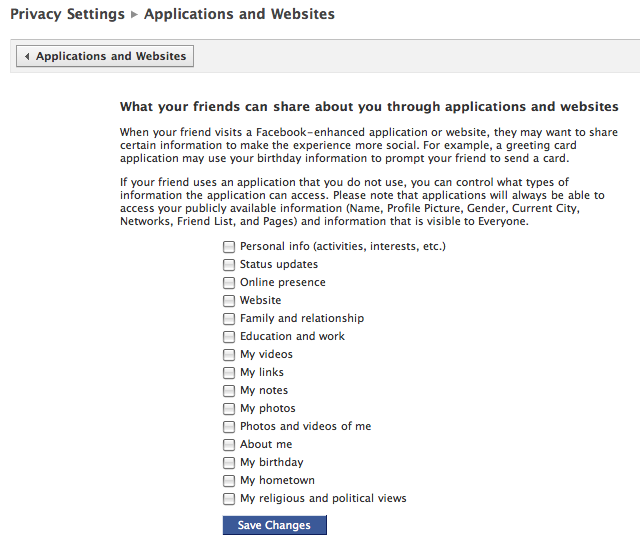
There has been a fair bit of hype around the promised improvements to Facebook privacy settings. The release of the new privacy settings format this week has come with a mixed reaction from users and privacy advocates. Many users claim some settings are in fact more open than they were before and that it is easier for users to give out details they may not wish to share.

The first time you log in since the new settings were put in place, you are prompted to review and update your settings. As you can see from the screen capture below, there is a long list of things impacting your privacy options to work through and check.

Personally, I was disappointed to see that some of the settings default to friends of friends. I was certainly hoping for default settings to be more locked down with the onus on the user to open up the settings to their liking. In working through this new setup, I noticed that not all settings seemed to adhere to the way I set them the first time through.

Be aware, and be safe online. Take the time to complete a thorough review of your settings. I would recommend the following actions:

  • a detailed review of ALL of your settings with appropriate changes saved
  • logout
  • login
  • recheck the settings for verification

I believe there continues to be more work for privacy and online safety advocates to do.

Related Reading

From the Facebook blog: new privacy tools
ABC News: 5 things to know about the new Facebook privacy settings.
Yahoo News: Privacy Advocates slamFacebook change

~ Mark

RCAC: Managing the Gap

One of the things I really enjoyed about the RCAC event this week was meeting people for the first time that I have only known though online interactions. It was truly a pleasure to meet @thecleversheep, @peterskillen and @aforgrave.

The format of the RCAC day is keynote, break out sessions, lunch, keynote and another round of break out sessions. This formula works well, and there is always a good selection of presenters and topics for the break out sessions. This year, I had registered for a presentation about the Creative Commons. What a pleasant surprise to discover that the session was being presented by @thecleversheep, who I had been following for some time on Twitter.  How wonderful to meet a kindred spirit who shares the same passion about copyright, licensing, managing content in appropriate ways in the web 2.0 world and spreading the word about digital citizenship!

I really liked the framework used to discuss content from a cradle to grave perspective: creation, ownership and rights of use through to public domain. You own the rights to content you create (original or using legal sources), all rights reserved and 50 years after your death, it becomes part of the public domain. The ‘gap’, defines the timeframe between creation and public domain. The Creative Commons provides a great way for you to formally indicate a specific type of copyright licensing and use of your work(s) while you are alive. Licensing typically fall into the  areas of:

  • attribution
  • share alike
  • non commercial
  • non derivative
  • and combination of these principles

Detailed license descriptions are available at the Creative Commons website. Excellent examples were given to illustrate music, videos, written content and remix/mashups. I had to smile when audience questions were taken at the end of the session and the answers to some scenarios were ‘that’s illegal’ and ‘that breaks copyright’. Just because something is easy to do with technology does not mean it is legal to to it.  The Clever Sheep knows his stuff !

I would encourage you to visit the Clever Sheep website and view the Creative Commons for RCAC article. Thanks for a great session, being a creative teacher and promoting digital citizenship.

Thank you to @dougpete and his organizing team for a great learning opportunity.

~ Mark